
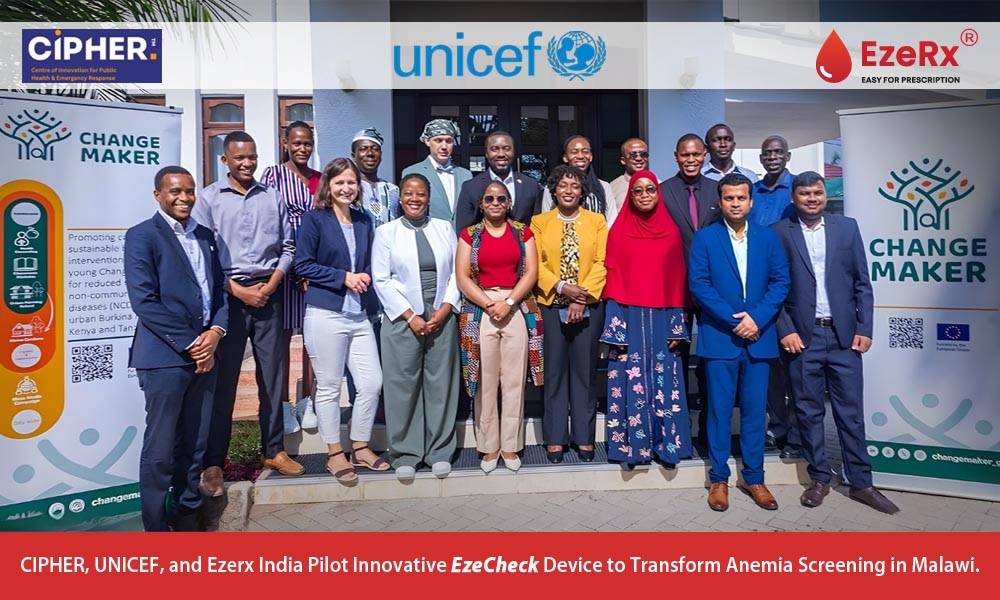
Anemia is a widespread health concern in Malawi and the greater sub‑Saharan region, particularly among children, women of reproductive age, and vulnerable populations. Traditional methods for detecting anemia require blood draws, laboratory processing, and trained personnel barriers in low‑resource settings. To address these gaps, CIPHER, in partnership with UNICEF and EzeRx is piloting the non‑invasive EzeCheck device to transform Anemia Screening Malawi. This initiative aims to expand early detection, improve access to care, and strengthen community health services.
Anemia is typically defined by lower than normal hemoglobin levels in the blood, with implications for growth, cognitive development, pregnancy outcomes, and overall health. In Malawi, anemia prevalence varies across populations, with many adults and children affected, especially in areas with high rates of infectious diseases such as malaria.
The EzeCheck device, developed by Ezerx India, is a portable, non‑invasive point‑of‑care screening tool that measures hemoglobin levels without the need for needles or blood samples. Using advanced optical sensors and proprietary algorithms, EzeCheck scans the fingertip to estimate hemoglobin in seconds, delivering rapid results to health workers even in rural or under‑resourced settings. This innovation can significantly improve the reach and frequency of anemia screening in Malawi and support early treatment referrals.
Unlike conventional methods which require laboratory infrastructure and trained phlebotomists EzeCheck eliminates the barriers of blood collection, reagent costs, and laboratory turnaround time. This improves screening efficiency and increases community screening coverage. The pilot in Lilongwe seeks to evaluate the device’s usability, acceptance by health workers and patients, and integration within Malawi’s health system.
Anemia Screening Malawi faces challenges due to limited infrastructure and competing health priorities. The EzeCheck device supports community health workers by offering:
Painless screening without needles
No blood draw required encouraging higher acceptance among patients.
Rapid results at the point of care
Immediate hemoglobin estimates help health workers make timely decisions during outreach activities and clinic visits.
Easy operation and mobility
Lightweight, battery‑operated, and requiring minimal training ideal for rural and remote locations.
Potential integration into existing services
Enables screening during immunization programs, antenatal visits, and community health campaigns.
By simplifying anemia screening, the EzeCheck pilot has the potential to increase early detection rates and link more individuals to treatment and nutritional interventions.
Anemia can result from nutritional deficiencies (such as iron deficiency), infections (including malaria and HIV), inherited blood disorders, and inflammation. In Malawi, anemia prevalence varies by age and group, with significant proportions of preschool children and women affected, reflecting the complex causes of anemia in the region.
Traditionally, anemia diagnosis involves drawing blood to measure hemoglobin levels in a laboratory. This process can be slow, costly, and difficult to scale in low‑resource settings. Non‑invasive screening, like EzeCheck, reduces the need for blood draws, shortens result turnaround time, and enables wider community screening. The device’s portability and ease of use help reach more people, especially where lab services are limited.
In children, anemia can impair physical growth, cognitive development, and school performance. In adults, anemia is associated with fatigue, reduced work capacity, and increased susceptibility to infections. Pregnant women with anemia face elevated risks for complications and adverse birth outcomes. Early detection through more accessible screening tools can support timely nutrition and medical interventions.
The pilot of the EzeCheck non‑invasive anemia screening device represents a promising advancement in Anemia Screening Malawi. By removing barriers to early detection and supporting community health workers with quick, pain‑free screening, this initiative has the potential to strengthen health systems and improve outcomes for vulnerable populations. As the pilot progresses, insights will guide future scale‑up strategies to benefit communities across Malawi and beyond.
