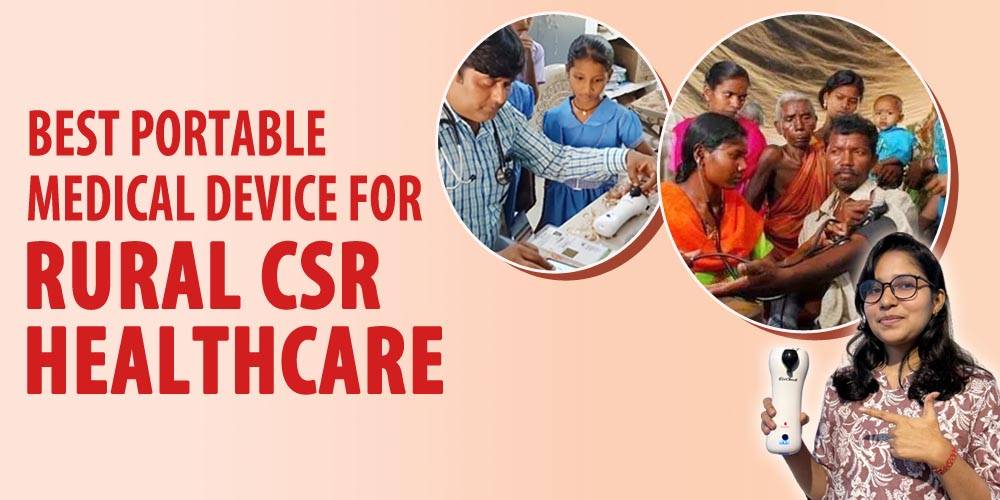
Imagine a health camp in a remote village. A young girl hesitates, eyes wide with a fear as old as medicine itself: the fear of the needle. This simple, human moment represents one of the most significant barriers to healthcare access in rural India. For millions, the discomfort and apprehension around blood draws prevent life-saving screenings for conditions like anemia, which, according to the National Family Health Survey-5 (NFHS-5), affects a staggering 57% of women and 67% of children in the country. Corporate Social Responsibility (CSR) initiatives hold the power and resources to bridge this gap, but their success hinges on choosing the right tools. The most effective portable medical devices for rural healthcare are those that combine clinical accuracy with rugged simplicity, overcoming infrastructure and psychological barriers to deliver true impact. This guide explores how smart, portable diagnostic devices for CSR healthcare are revolutionizing outreach, turning daunting medical procedures into accessible, fear-free check-ups.
What is the Role of CSR in Healthcare?
What Does CSR Mean in Healthcare?
In the context of healthcare, Corporate Social Responsibility (CSR) extends beyond philanthropy. It represents a strategic commitment by companies to improve the health and well-being of communities, often beyond their immediate stakeholders. This involves deploying resources, expertise, and innovation to address critical public health gaps. For many corporations, CSR in healthcare is a core component of their societal license to operate, focusing on sustainable, measurable health outcomes rather than one-time aid.
Why CSR in Healthcare is Important Especially for Rural Communities
The importance of dedicated CSR healthcare initiatives is magnified in rural settings. These communities often face a perfect storm of challenges: geographic isolation, scarcity of medical professionals, and limited public health infrastructure. Rural healthcare CSR initiatives directly combat these disparities by channeling corporate funds and strategic planning into areas where government programs may be stretched thin. They play a crucial role in preventive care, early diagnosis, and health education, which are fundamental to breaking the cycle of poverty and poor health. By deploying mobile health tools for remote diagnostics, CSR can bring the clinic to the community, rather than waiting for the community to reach a clinic.
What Are Examples of CSR Activities in Healthcare (Especially Rural Outreach)?
Effective CSR activities in healthcare are diverse and tailored to community needs. Common examples include
Why Rural Healthcare Deserves CSR Attention
The Rural Healthcare Challenge Lack of Infrastructure, Shortage of Diagnostics, etc.
The core rural healthcare challenges are systemic. A shortage of diagnostic laboratories means simple tests require travel to distant towns, costing patients time and money they often don't have. The lack of reliable electricity and internet further complicates the use of standard medical equipment. These lack of infrastructure issues in rural health camps create a diagnostic desert, where treatable conditions go undetected until they become severe emergencies. The human resource gap too few doctors and technicians willing to work in remote areas exacerbates every other problem.
Why is Anemia Screening a Strategic Priority for Modern CSR?
While CSR in healthcare can address many issues, contemporary data reveals a compelling case for prioritizing anemia. The numbers are staggering: according to the latest National Family Health Survey (NFHS-5), 57% of women (15-49 years) and 67% of children (6-59 months) in India are anemic. This isn't just a medical statistic; it's a national productivity crisis. Anemia directly impairs cognitive development in children, reduces educational outcomes, lowers physical capacity in adults, and increases risks for mothers and newborns.
For a CSR committee, this translates into an opportunity for unmatched impact. Investing in anemia screening is not a generic health activity; it is a targeted intervention that:
How CSR Initiatives Bridge the Gap - Mobile Health Clinics, Portable Diagnostics, Community Outreach, etc.
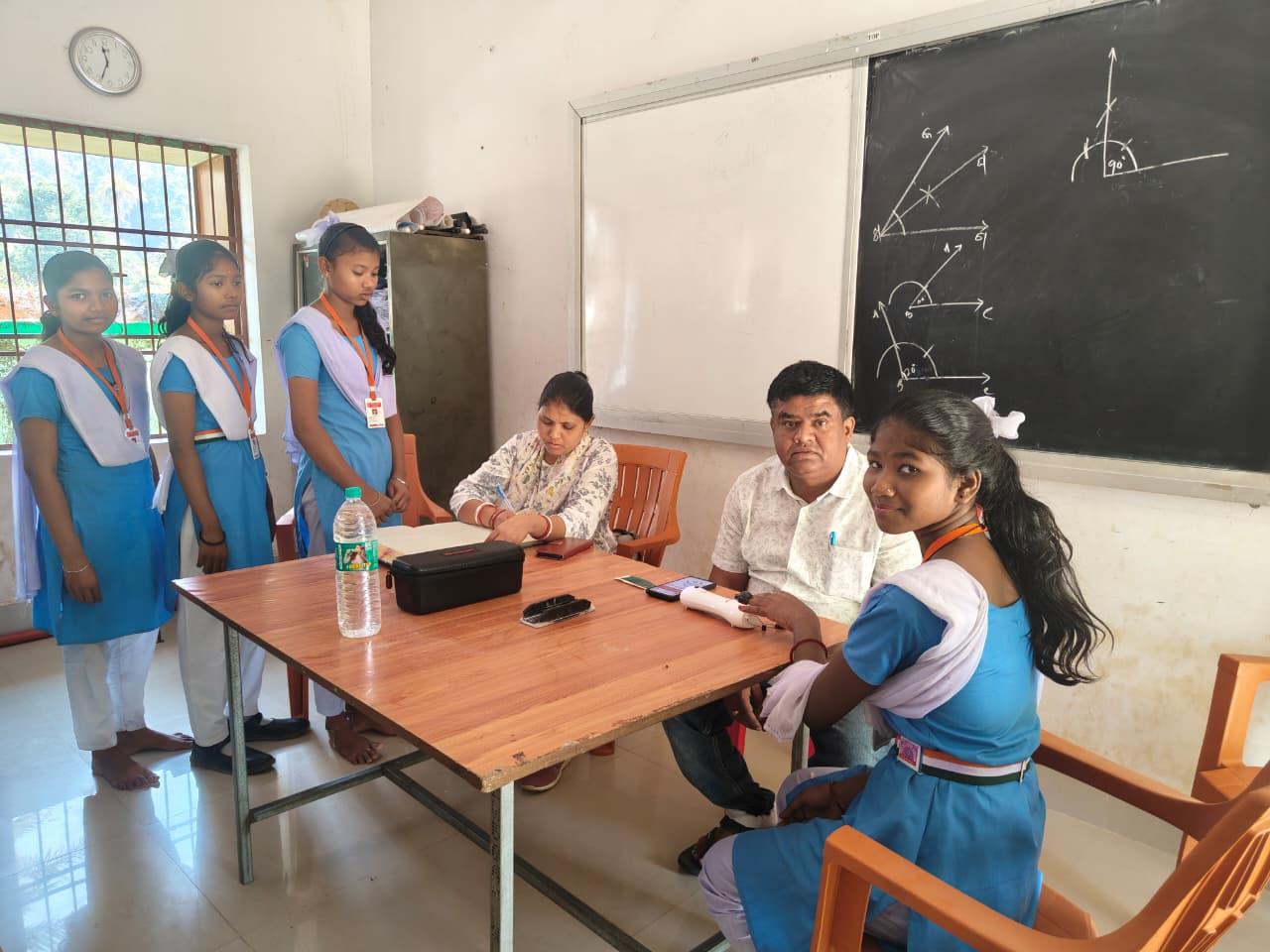
This is where targeted CSR initiatives bridge the gap. They provide agile, focused solutions that bypass traditional infrastructure hurdles. By funding and deploying mobile medical devices for CSR projects, corporations enable health workers to conduct screenings anywhere—a school, an Anganwadi centre, or a community hall. This model of portable diagnostic tools for rural outreach turns any space into a temporary screening center. Furthermore, CSR programs often integrate community outreach and education, ensuring that screening is followed by understanding, promoting lasting behavioral change and trust in healthcare services.
What Kind of Medical Devices Are Relevant for Rural CSR Healthcare?
What Are Class A, B, C Devices and Why Classification Matters for Rural Deployments
In India, medical devices are classified by risk under the Medical Devices Rules, 2017. Understanding this classification (Class A, B, C, D, from low to high risk) is crucial for rural deployments as it dictates regulatory pathway, necessity of medical supervision, and complexity of use. For CSR, focusing on lower-risk devices often translates to easier procurement, simpler training, and more flexible deployment.
What Are Class I or Class A Devices - Low-Risk, Simple
Class A (or Class I) devices are low-risk. They are non-invasive, simple in design, and often ideal for basic screening. Examples highly relevant for rural CSR include portable vital sign monitors (for blood pressure, pulse oximetry), portable glucometers, and non-invasive hemoglobin meters for rural health screening. Their simplicity allows rapid deployment and use by trained volunteers.
What Are Class II or Class B Devices - Moderate-Risk, More Complex Diagnostics
Class B devices pose moderate risk. They may be non-invasive or slightly invasive and often provide more detailed diagnostic information. This category includes many portable diagnostic devices, like advanced digital thermometers, certain types of urine analyzers, and some ECG machines. They offer greater diagnostic capability while still being suitable for field use with proper training.
What Are Class III or Class C Devices - High-Risk, Advanced Equipment
Class C and D devices are high-risk, often invasive or life-supporting (e.g., ventilators, implantable devices). They require strict clinical oversight, specialized infrastructure, and are less commonly the focus of broad CSR screening camps, though they may be relevant for hospital-building initiatives.
Why Portable (or Mobile) Medical Devices Are Best Suited for Rural CSR Initiatives
The case for portable medical equipment in rural areas is compelling. Their design directly counteracts rural challenges. They are battery-operated to work despite power cuts, compact for transport on rough roads, and built to be durable. Most importantly, they enable affordable portable diagnostics for underserved communities by eliminating the need for expensive lab construction, reducing recurring costs of consumables, and maximizing the number of people screened per day. This efficiency is the cornerstone of scalable, high-impact CSR healthcare initiatives.
Why EzeCheck is Chosen as the Best Solution for CSR-Driven Rural Healthcare
In the critical domain of anemia screening a top public health priority—one device has emerged as a benchmark for CSR-driven rural healthcare the EzeCheck non-invasive hemoglobinometer. Its selection by leading organizations is not accidental but a result of its specific design for the realities of the field.
Why EzeCheck Stands Out as a Promising Solution for Rural CSR Programmes
EzeCheck stands out by solving the core triad of rural screening problems: fear, infrastructure, and cost.
Why EzeCheck is the Best Choice for Governments & CSR-Partner Companies
For entities aiming for large-scale impact, EzeCheck's value proposition is clear. It is explicitly designed for integration with flagship government programs like Anemia Mukt Bharat and the Rashtriya Bal Swasthya Karyakram (RBSK). Its IoT-enabled platform provides real-time, geotagged data dashboards, allowing CSR partners and government bodies to monitor campaign coverage, identify anemia hotspots, and measure impact transparently a key requirement for reporting. This makes it an ideal mobile medical device for CSR projects that demand both scale and accountability.
What is EzeCheck - Features, Origin, Manufacturer, and How It Works
EzeCheck is India's first ICMR-validated non-invasive hemoglobinometer, developed by EzeRx Health Tech. Founded with the mission "Easy for Prescription," EzeRx pioneered this technology to make critical screening accessible.
How it Works: The device uses safe, cool LED light shone through the fingertip. Sophisticated optical sensors capture data, which is then analyzed by proprietary AI algorithms to calculate hemoglobin concentration all in under 60 seconds.
Clinical Validation: Its 93% accuracy (with >95% sensitivity & specificity) is validated by the ICMR-RMRC and other institutions, a critical trust marker for CSR healthcare initiatives.
Compliance & Safety: It is a Class B medical device compliant with ISO 13485, IEC 60601-1, and ISO 10993 standards, ensuring clinical safety and reliability.
Cost & Practical Considerations for Implementing EzeCheck in CSR Programmes
How Much Does EzeCheck Cost - Affordability for CSR Budgets
When evaluating the cost of EzeCheck, CSR committees must consider the total cost of ownership, not just the unit price. Unlike traditional methods, EzeCheck has zero recurring consumable cost no test strips, lancets, or reagents are needed. This transforms the economics of mass screening. While there is an upfront device investment, the cost-per-test plummets with scale. Data from field deployments indicates that large-scale programs have saved over $97.5 million in associated testing costs, making it an profoundly cost-effective portable medical device over the lifecycle of a multi-year project.
What Logistical or Operational Benefits EzeCheck Offers
The logistical benefits are a game-changer for rural deployment:
Aligning with Sustainable Health - The 4 Pillars & How Portable Devices Contribute
True health impact extends beyond a one-time camp. Sustainable health rests on four pillars, each directly supported by technologies like EzeCheck.
What Are the 4 Pillars of Sustainable Health?
How Portable Diagnostics (Like EzeCheck) Support These Pillars in Rural Areas
EzeCheck actively reinforces each pillar, creating a闭环 (closed-loop) system for rural healthcare access through portable diagnostics.
Step-by-Step How CSR Initiatives Can Deploy Portable Medical Devices
Deploying a device like EzeCheck within a CSR healthcare initiative is a structured process focused on partnership and impact.
Phase 1: Discovery & Alignment
The journey begins with a conversation. CSR teams contact - www.ezerx.in/contact EzeRx to outline their goals, target geography, and scale. An EzeRx representative connects to deeply understand the project's purpose and co-create a plan.
Phase 2: Due Diligence & Planning
EzeRx provides all necessary documentation for corporate due diligence ICMR validation reports, ISO certifications, and compliance documents. A live, detailed demonstration is arranged to showcase the device's workflow and answer technical queries.
Phase 3: Deployment & Empowerment
Devices are deployed to the field. EzeRx conducts comprehensive training for the identified personnel or volunteers, ensuring they are confident in device operation, basic troubleshooting, and data management.
Phase 4: Continuous Support
Partnership doesn't end at deployment. EzeRx provides ongoing online support. Crucially, if an urgent technical issue arises that cannot be resolved remotely, the commitment includes sending a technical representative to the project site for physical support, ensuring zero disruption to the vital CSR healthcare initiative.
Why Portable Devices, Especially EzeCheck - Are the Smart Choice
In conclusion, selecting the right portable medical devices for rural healthcare is the most critical decision in determining the success and depth of a CSR health program. Devices that are merely small versions of hospital equipment are not enough. The smart choice is technology engineered for the constraint of the field: painless to ensure participation, portable to ensure access, and connected to ensure impact measurement.
EzeCheck exemplifies this principle. It transforms the daunting task of mass anemia screening into a manageable, efficient, and deeply humane process. By choosing a solution with proven validation, a clear path to sustainable health pillars, and a track record of empowering major partners like the Tata Consultancy Services, Vedanta Limited, and JSW Foundation, CSR leaders can move with confidence. They can ensure their investment doesn't just purchase devices, but delivers genuine, scalable health equity to communities that need it most.
FAQs On CSR Healthcare Camp In Rural Area
Q1. What Happens if Regular Power or Infrastructure is Absent Can EzeCheck Still Work Reliably?
Absolutely. This is a core design feature. EzeCheck is a portable diagnostic device for rural areas built for such scenarios. It has a long-lasting internal battery that can conduct hundreds of tests on a single charge. It functions fully offline, storing all data locally until it can sync when internet connectivity is available. This makes it perfectly suited as a mobile medical device for remote villages with unstable or no electricity.
Q2. Which CSR Projects Has EzeCheck Already Been Used In?
EzeCheck has been deployed by a wide spectrum of leading organizations, demonstrating its trust and versatility. Key partners include major corporate foundations like Tata Consultancy Services (TCS), JSW Foundation, and Vedanta Limited; implementing NGOs such as American Indian Foundation (AIF), Swades Foundation, and Action Against Hunger; and in direct collaboration with government missions like the National Rural Health Mission (NRHM) in Jajpur, Odisha. This collective action has powered over 3.5 million screenings globally.
Q3. Are Low-Risk (Class I) Devices Enough Or Do We Need Higher-Class Devices Too?
For broad-based screening and preventive CSR healthcare initiatives, Class A and B devices are typically the most appropriate and effective. They strike the ideal balance between diagnostic capability, ease of use, and regulatory simplicity. A device like EzeCheck (Class B) provides lab-comparable accuracy for anemia while being deployable by trained community workers. Higher-class (C & D) devices are usually necessary for definitive diagnosis and treatment in clinical settings, which may be part of a different, more specialized CSR pillar.
Q4. How to Ensure Quality, Trust, and Compliance When Deploying Portable Devices?
Trust is built on verifiable credentials. Always choose devices that are:
