
Do you feel tired even after sleeping all night? Are your hands always cold? Does the thought of needles make you want to run and hide? You're not alone. Millions of people want to check anemia without a blood test before stepping foot in a clinic. And honestly? I don't blame you. Nobody likes getting poked. The good news? Your body gives you clues. Lots of them. And there's actually a way to get real numbers without a single needle. Let's dive in.
Your blood has this super important protein called hemoglobin .Think Hemoglobin is a protein in red blood cells that carries oxygen from your lungs to the rest of your body. It also brings carbon dioxide back to your lungs so you can breathe it out.
So the simple formula is: Low iron = low hemoglobin = low oxygen = tired, cranky, cold body
Let's get a tiny bit science-y, but I promise to keep it painless. Hemoglobin is made of four protein molecules (globins) with a special compound called heme in the middle. And right in the center of each heme? One atom of iron. That iron is what actually grabs onto oxygen. No iron = no oxygen grabbing. Simple as that.
|
Age Group |
Normal Hemoglobin Range (g/dL) |
|
Newborns |
14 - 24 |
|
Infants (1-2 months) |
10 - 18 |
|
Children (1-12 years) |
11 - 14.5 |
|
Teen boys |
13 - 16 |
|
Teen girls |
12 - 16 |
|
Adult men |
13.5 - 17.5 |
|
Adult women |
12 - 16 |
|
Pregnant women |
11 - 15 |
So what's the relation? Anemia is literally defined as having hemoglobin levels below these normal ranges. When a doctor says "you're anemic," they mean your hemoglobin numbers are too low.
Why checking hemoglobin matters: Because low numbers affect everything. Your focus at work. Your energy to play with kids. Your immune system. Even your hair growth. It's not just "feeling tired" it's your whole body running on half power.
Here's the thing anemia doesn't pick randomly. Some people are way more likely to deal with it. See if you're on this list:
Girls and women – Every month, periods mean losing blood. Losing blood means losing iron. Women need almost twice as much iron as men. It's not fair, but it's biology.
Picky eaters – If your idea of a balanced meal is pizza and more pizza, your iron levels might be crying for help. Iron comes from real food – meat, greens, beans.
Athletes – Sounds weird, right? Shouldn't exercise make you healthier? It does, but athletes also use more iron for energy. Plus they lose a little through sweat. Endurance athletes especially need to watch their levels.
People with stomach issues – Crohn's, celiac, even constant heartburn can mess with how your body absorbs iron from food. You could eat all the spinach in the world and still be anemic if your gut can't grab the iron.
Pregnant women – Baby is building their own blood supply from scratch. They take what they need from mom. If mom isn't getting extra iron, she can become anemic fast.
Older adults – As we age, we might eat less, eat worse, or have health conditions that cause blood loss. Plus medication can interfere with absorption.
This is what you came for, right? Let's do this. No needles, no appointments, just you and a mirror. 1 ) The Fingernail Test, 2) The Eyelid Trick Doctors Use (Conjunctiva Pallor Test), 3) Anemia Tongue and other most weirdest symptom is Craving Ice
Pale Skin Anemia (Pallor) : Look at your face in natural light. Does it look washed out? Like you've seen a ghost, or except you are the ghost. Check inside your lips. Pull them down. That color should be pinkish-red. Pale or bluish? Not great.Check your palms. Open your hand. The creases should be pink. If they're as pale as the rest of your hand, that's another clue.
Cold Hands and Feet : You know that friend who wears gloves indoors? Could be anemic. When hemoglobin is low, your body gets smart (but mean). It sends oxygen to your important organs first heart, brain, lungs. Your hands and feet? They're lower on the priority list. So they get cold. And stay cold. If your hands and feet are freezing while everyone else is comfortable, and you're also tired? Connect the dots.
Blue Sclera Iron Deficiency (Rare But Real!) : This one is wild. And rare. But real. Sclera is the white part of your eye. In some people with severe iron deficiency, that white part can take on a slightly bluish tint. Not bright blue – more like a very faint blue tinge.
Restless Legs, Fatigue & Syndrome – Your legs feel creepy, crawly, tingly at night. You have to move them. It keeps you awake. There's a known link to iron deficiency. Like, a strong one. Fatigue like ("I'm tired." We're talking "I slept 9 hours and I need a nap after breakfast" ) Where you can't focus. Where climbing stairs feels like a workout. Shortness of breath its most common symtoms when doing simple things makes you pant. Walking to the mailbox. Carrying groceries. Putting on shoes. If you're winded for no reason, low oxygen delivery is a likely culprit.
Mirror checks are great for clues. But what if you want actual numbers? What if you want to know not guess? That's where technology comes in. And I'm not talking about some sketchy app that claims to read your blood through the camera. (Those don't work, by the way.)
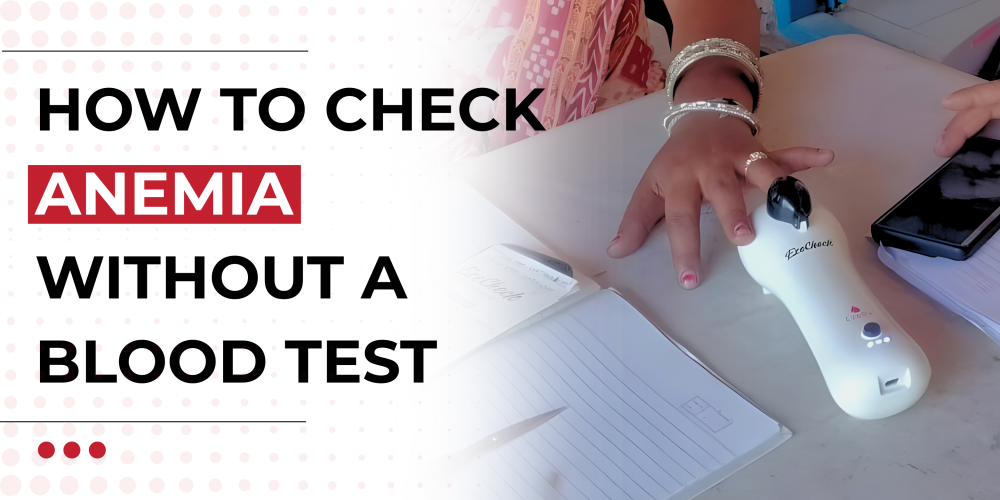
What is it? A small, handheld device that checks your hemoglobin levels without a single drop of blood. No finger pricks. No needles. No "just a little pinch."
How it works: It uses light technology. Basically, it shines specific wavelengths of light through your finger (or other body part) and measures how much is absorbed. Different hemoglobin levels absorb light differently. It's like magic, but it's actually physics.
Who it's for: Anyone who hates needles. Kids who scream at the sight of a lancet. Athletes who want to track their levels. People on anemia treatment who need to check if it's working. Basically, everyone.
Where to get it: https://www.ezerx.in/contact
Here's the part where I'd normally say "trust me, bro." But you shouldn't. So here are the facts is EzeCheck has been tested against standard lab methods. Multiple times. The results show excellent correlation .
For more to know: Link to blog: Non-Invasive Hemoglobin Meter
EzeCheck Perfect for Screening (is my hemoglobin normal?), monitoring (is my treatment working?), and tracking (how am I doing this week?). But its not a full replacement for do diagnosis. If EzeCheck shows low readings, you still need a doctor to figure out WHY. But it tells you when to go to the doctor.
Let's put it all side by side so you can see.
|
Method |
Pain Level |
Speed |
Accuracy |
Best For |
|
Mirror Self-Checks |
None |
Instant |
Medium (clues only) |
First alert, daily awareness |
|
Finger Prick Test |
Ouch! |
Fast |
Good |
Quick home checks |
|
EzeCheck Non-Invasive |
None! |
Instant |
Clinically validated |
Daily tracking, kids, needle-phobic |
|
Lab Blood Test |
Needle |
Slow (hours/days) |
Gold Standard |
Official diagnosis |
Finger prick: It works. It's cheap. It also hurts, leaves a tiny wound, and you have to handle blood. Good for occasional use. Not fun for daily tracking.
Lab test: The gold standard. Nothing beats it for official diagnosis. But it requires a needle, a lab, and waiting. And more needles if you need to track changes.
EzeCheck: No pain. Instant results. You can check daily without dreading it. Track trends. Share with your doctor. The winner for keeping an eye on your health long-term.
YES! With EzeCheck, absolutely. No needles. No pain. No waiting for results. Just a quick scan and you know.
Track changes over time. See if your diet is working. See if those iron supplements are actually helping. Share the data with your doctor so they can make better decisions.
Here's the thing about food – you can't out-eat severe anemia. But you CAN support your body and prevent mild anemia with the right foods.
I made this table super simple. Pick your column (veg or non-veg) and follow along.
|
Day |
For Vegetarian Peoples |
For Non-Vegetarian People |
Fruits & Drinks |
Iron-Boosting Tips |
|
Monday |
Spinach dal + brown rice |
Chicken liver + veggies |
Orange juice + apple |
Vitamin C helps absorb iron! |
|
Tuesday |
Chickpea curry + quinoa |
Fish curry + spinach |
Lemon water + banana |
Add lemon to everything |
|
Wednesday |
Lentil soup + whole wheat roti |
Beef stir-fry + bell peppers |
Pomegranate + amla juice |
Cook in iron pan if possible |
|
Thursday |
Palak paneer + millet |
Egg bhurji + spinach paratha |
Watermelon + mosambi juice |
Avoid tea/coffee with meals |
|
Friday |
Bean salad + quinoa |
Lamb chops + roasted veggies |
Grapefruit + berries |
Snack on pumpkin seeds |
|
Saturday |
Tofu scramble + fortified cereal |
Tuna salad + whole grain bread |
Dried apricots + dates |
Soak nuts overnight |
|
Sunday |
Mixed bean soup + veg bowl |
Grilled chicken + kale salad |
Smoothie (spinach + orange) |
Meal prep for the week! |
Important Diet Tips :
Avoid tea and coffee with meals – They have tannins that block iron absorption. Wait at least an hour after eating before having your chai.
Pair iron with Vitamin C – Eat your spinach with an orange. Have lemon juice on your dal. Vitamin C helps your body grab that iron.
Cook in cast iron – Seriously. Especially if you're cooking acidic foods like tomatoes. A little bit of iron leaches into the food. Free iron.
Soak beans and lentils overnight – This reduces phytates, which can block absorption. Plus they cook faster. Win-win.
Let's be real these Nail test, Eyelid test, Craving ice and Multiple signs. But they're clues, not numbers. They tell you something might be wrong. They don't tell you how wrong.
ICMR- RMRC Clinically validated. Tested against lab standards. Used by healthcare professionals. Instant, accurate, painless. Great for trending – seeing if you're getting better or worse.
Link: EzeCheck Product Page
For official diagnosis? No. Lab tests are still the gold standard. When you need a formal diagnosis, you need a doctor and a needle. But For daily tracking, screening, and monitoring? YES. Absolutely. Hospital and 2100+ doctor recemented anemia test device which to require any blood to test is EzeCheck like a weighing scale. Your scale tells you if you're gaining or losing weight. It helps you track progress.
Home checks are great. But some symptoms mean stop messing around and
Go to doctor such as : Chest pain, Racing heart, Trouble breathing, Fainting, Severe dizziness, Very pale or cold/clammy skin, Blood in stool or vomit.
Symptoms That Need a Doctor Appointment This Week - 1)Extreme fatigue for weeks that won't go away, 2)You just feel "off" and can't explain it, 3) EzeCheck shows consistently low readings, 4) Pale skin, brittle nails & ice craving combo
Here's the thing I have to tell you, other illnesses look like anemia. Thyroid problems. Heart issues. Depression. Even some cancers. You might miss internal bleeding. Bleeding ulcer. Colon issues. Things that need treatment now. Low iron could be a symptom of something bigger. Or it could just be diet. You don't know until you check. So please Use these tips. Use EzeCheck and if the result speaks you are anemic then , see a doctor. They're the real experts.
Look, your body is smart. It sends signals when something's wrong. Tiredness. Cold hands. Weird cravings. Pale skin. These are all messages.
Learning how to check anemia without a blood test is about listening to those messages. Using mirror tricks for daily awareness. Using EzeCheck for actual numbers without pain. And knowing when to call in the pros.
You don't have to be scared of needles. You don't have to guess. You don't have to wonder "Am I anemic or just lazy?" With the right knowledge and the right tools, you can take control of your health. No fear. No needles. Just answers.
Now its Your move Bookmark this page. Share it with a friend who's always tired. And if you're ready to ditch needles for good, check out EzeCheck today.
Q2.Is pale skin always anemia?
Answer: Not always! Some people are just naturally pale. But if you're paler than normal AND tired, it's worth checking with a device like EzeCheck or visiting a doctor.
Q3.What does anemia tongue look like?
Answer: An anemia tongue often looks smooth, shiny, and pale. It might feel sore and lose the little bumps. If you notice this along with other symptoms, consider checking your hemoglobin.
Q4.Why do anemic people crave ice?
Answer: Doctors aren't 100% sure! Chewing ice might wake you up or soothe sore tongue. It's a real thing called pagophagia and is a strong clue for iron deficiency.
Q5.How accurate are non-invasive hemoglobin monitors?
Answer: Clinically validated devices like EzeCheck show excellent correlation with lab tests. They're perfect for daily tracking and screening, though a lab test remains the gold standard for official diagnosis.
Q6.What foods fight anemia fast?
Answer: Spinach, red meat, beans, pumpkin seeds, and lentils. Eat with Vitamin C (oranges, lemons) to absorb more! Check our 7-day diet plan above.
Q7.When should I worry about anemia?
Answer: If you can't breathe, feel chest pain, or faint go to ER now. If you're just tired, use EzeCheck to check your levels and make a doctor appointment if they're low.
Q8.Where can I buy EzeCheck?
Answer: Visit www.ezerx.in/product/ezecheck-non-invasive-hb-test-kit to learn more and purchase your own non-invasive hemoglobin meter.
Q9.Can children use EzeCheck?
Answer: Yes! It's painless and needle-free, perfect for kids who are scared of blood tests. No more holding down screaming children for a finger prick.
Q10. How often should I check my hemoglobin?
Answer: If you're healthy, once a month is fine. If you're anemic or treating anemia, check weekly to see if your diet/supplements are working.
